The Thylacine
Protected by law, fifty-nine days too late.
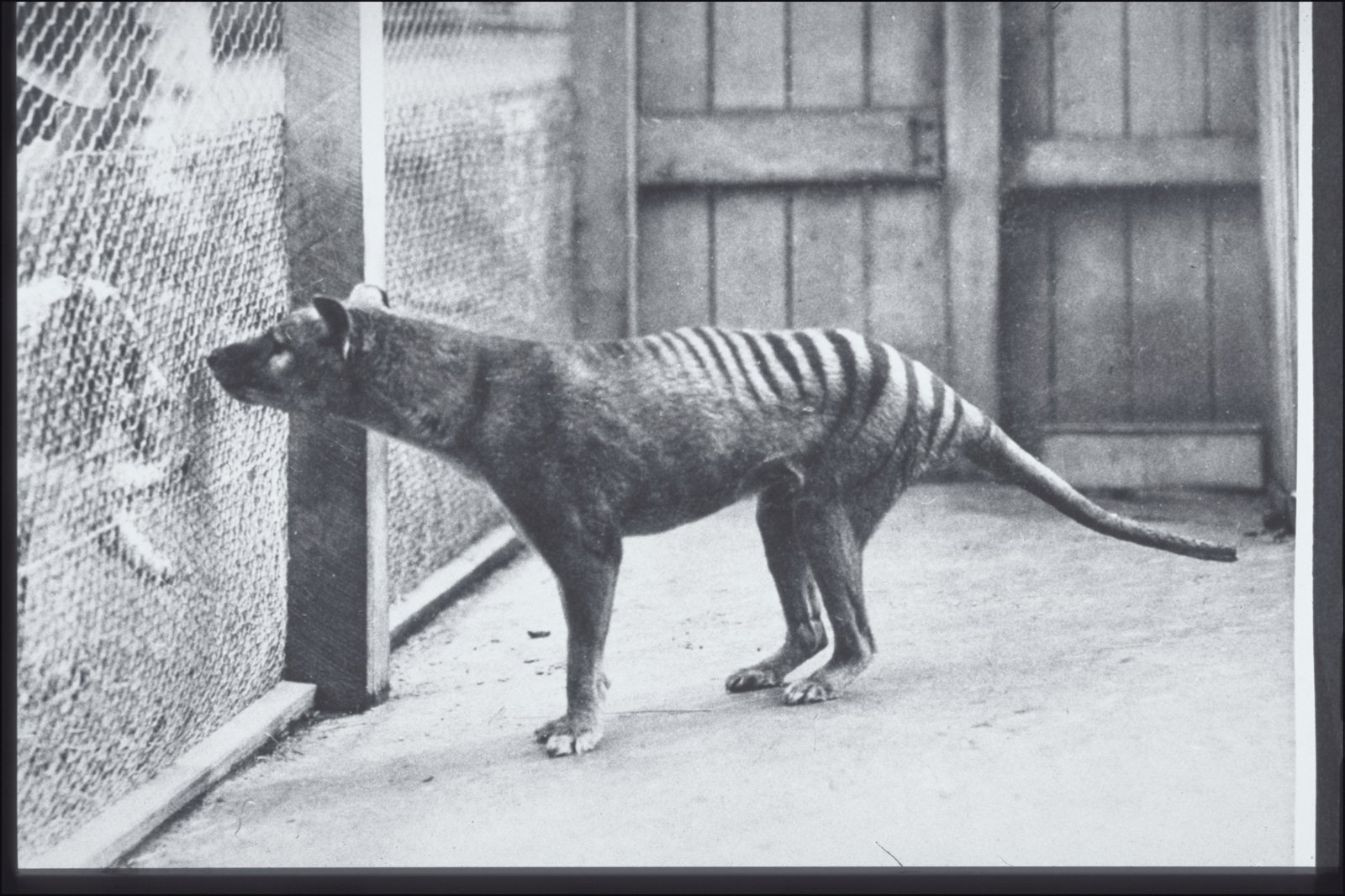
- EXISTED
- c. 4 million years ago – 1936
- WHERE
- Tasmania; formerly mainland Australia & New Guinea
- LOST
- 7 September 1936
- CAUSE OF LOSS
- Bounty hunting, habitat loss, and indifference
The thylacine was the largest carnivorous marsupial of modern times, a shy, dog-like hunter with a stiff tail and a coat of dark stripes, found nowhere on earth but Tasmania by the time Europeans arrived. Farmers blamed it for killing sheep, and the government paid a pound per head. More than two thousand bounties were claimed, and by the 1920s the animal had become a rumour in its own forests.
Protection came on 10 July 1936, fifty-nine days before the last known thylacine died, captive in Hobart’s Beaumaris Zoo, shut out of its sleeping quarters on a freezing September night. Film survives of it pacing its concrete yard: a few seconds of an animal that no longer exists, yawning at a keeper who did not know he was filming the end.
Benjamin, who died of exposure at Beaumaris Zoo, Hobart, on the night of 7 September 1936, fifty-nine days after the species was granted legal protection.