The Great Auk
The north’s gentle penguin, loved best as a specimen.
- EXISTED
- Pleistocene – 1844
- WHERE
- North Atlantic coasts and islands
- LOST
- 3 June 1844
- CAUSE OF LOSS
- Hunted for feathers, oil, bait, and collectors’ cabinets
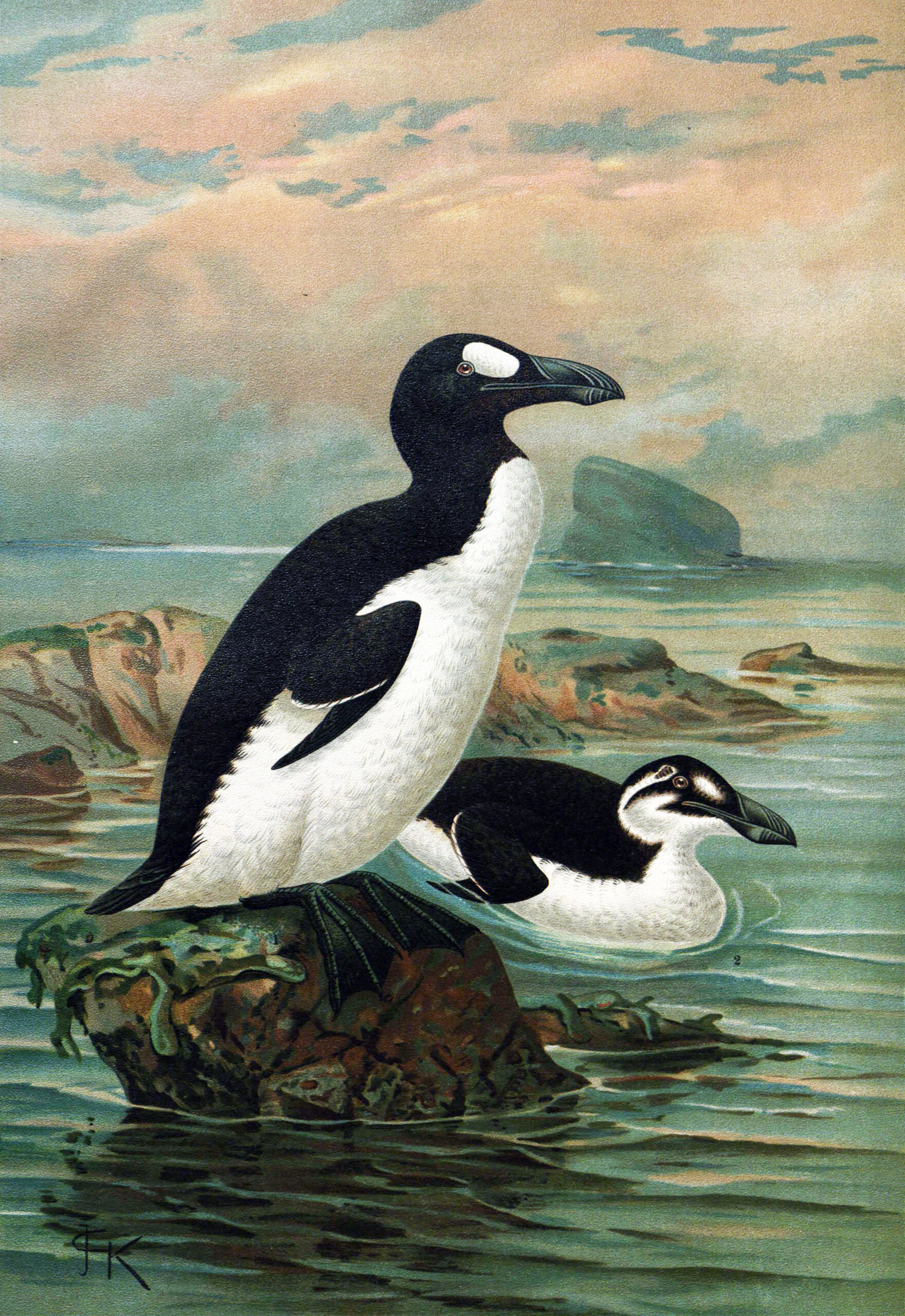
The great auk was the original ‘penguin’, the flightless black-and-white seabird of the North Atlantic for which the southern penguins were later named. It stood nearly a metre tall, swam like a fish, and waddled trustingly up to the sailors who slaughtered it by the thousand for feathers, oil and bait. As it grew rare, museums and collectors paid handsomely for skins and eggs, and the price of each bird rose as the species fell.
By 1844 the last known colony had dwindled to a single pair nesting on the volcanic island of Eldey, off Iceland. On 3 June three fishermen landed, hired to collect specimens for a merchant. Two of them strangled the adult birds; the third found the pair’s single egg, and, finding it cracked, crushed it beneath his boot.
A nesting pair, strangled on Eldey Island, Iceland, on 3 June 1844. Their only egg, found cracked, was crushed under a fisherman’s boot.