The Amber Room
The eighth wonder, packed into crates and into legend.
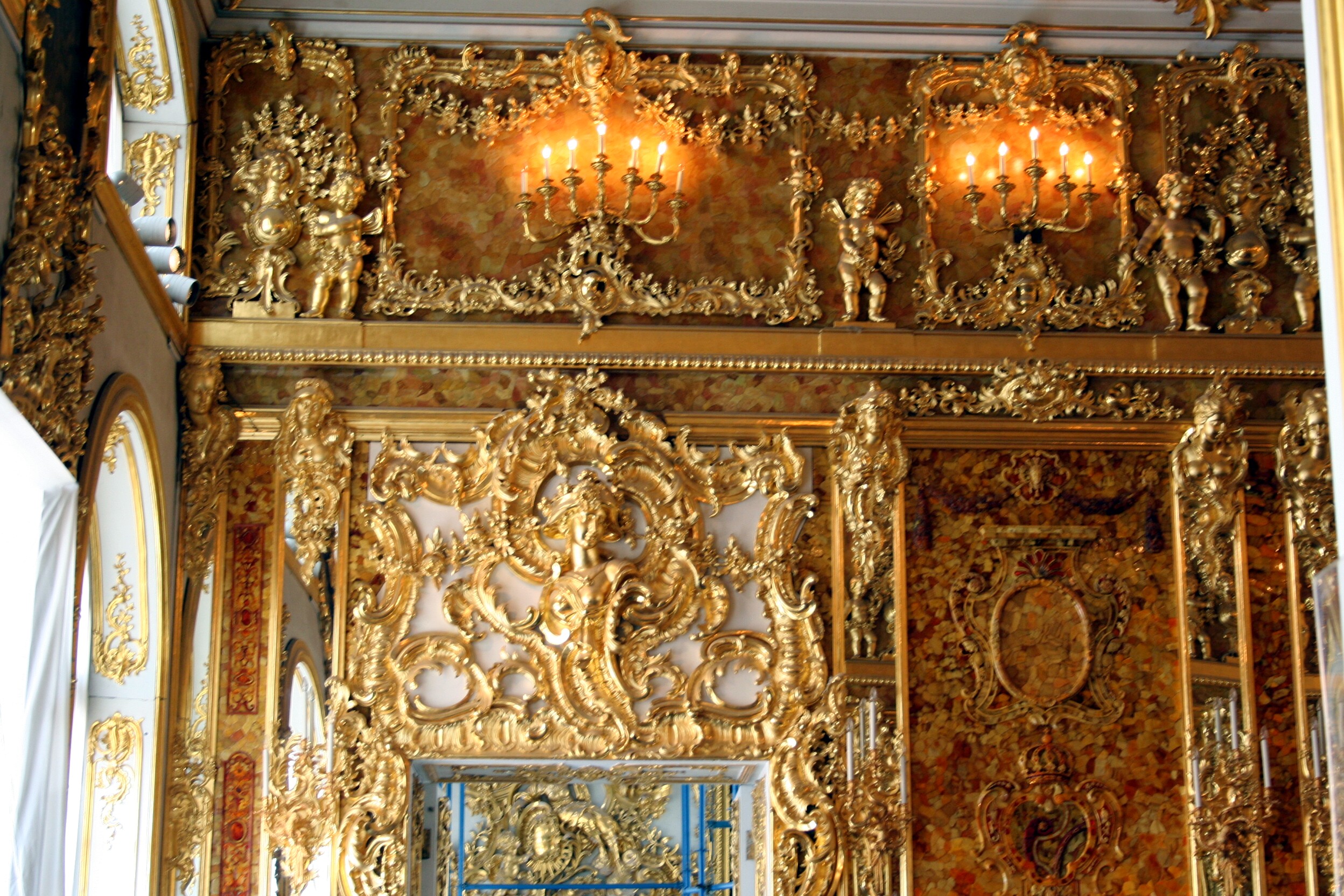
- EXISTED
- 1701 – 1945
- WHERE
- St Petersburg, Russia; last seen in Königsberg
- LOST
- 1945
- CAUSE OF LOSS
- Looted in war; vanished in the fall of Königsberg
The Amber Room was a chamber walled entirely in carved amber, gold leaf and mirrors, six tonnes of fossilised resin worked by Prussian and Russian craftsmen, given by Frederick William I of Prussia to Peter the Great in 1716 and enlarged at Tsarskoye Selo until contemporaries called it the eighth wonder of the world. In candlelight, visitors said, the walls appeared to burn from within.
When Germany invaded in 1941, curators tried to hide the panels behind wallpaper; the amber was found, stripped in thirty-six hours, and shipped to Königsberg Castle, where it was last displayed, and last verifiably seen, before the city fell in 1945. The castle burned. No confirmed panel has ever surfaced. A replica took twenty-four years to build; the original took two hundred and twenty-eight to lose.
Last verifiably seen crated in Königsberg Castle in early 1945, before the city fell and the castle burned. No confirmed panel has surfaced since.