The Colossus of Rhodes
Sixty-six years a wonder; a rumour ever since.
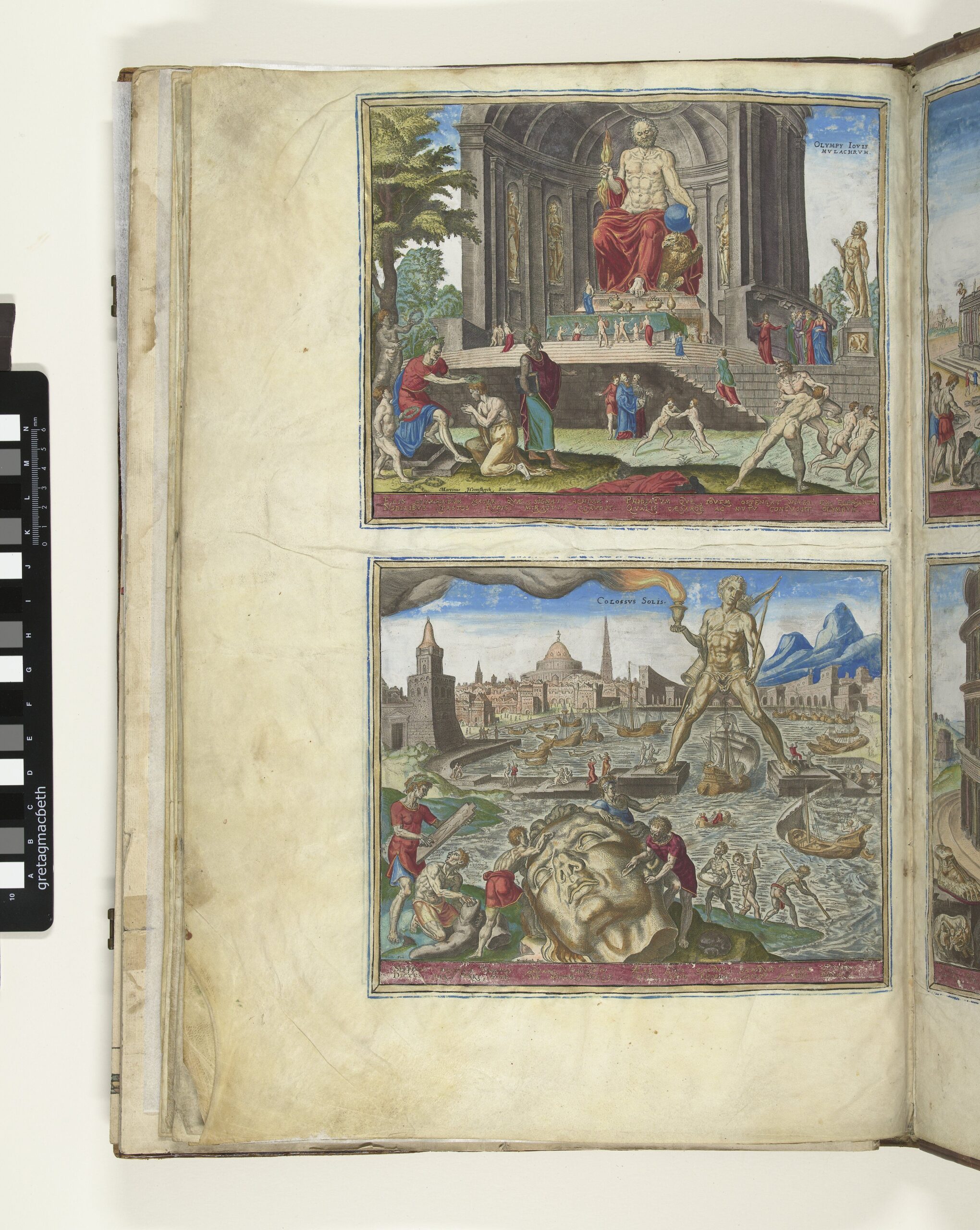
- EXISTED
- c. 280 – 226 BC
- WHERE
- Rhodes, Greece
- LOST
- c. 226 BC
- CAUSE OF LOSS
- Earthquake; the bronze later sold for scrap
For a little over half a century, a bronze sun-god some thirty-three metres tall stood at the harbour of Rhodes, built from the captured siege engines of an army that had failed to take the city. The Colossus was counted among the Seven Wonders of the Ancient World almost as soon as it was finished, and it remains the only one of the seven of which not a single fragment survives.
An earthquake snapped it at the knees around 226 BC, and the oracle at Delphi forbade rebuilding. For nearly nine hundred years travellers came to marvel at the fallen giant, Pliny wrote that few men could wrap their arms around its thumb. In AD 654 the bronze was finally sold for scrap and carried away, tradition says, on the backs of nine hundred camels.
The fallen bronze, visited and wondered at for nearly nine centuries, was sold for scrap in AD 654 and melted down, nine hundred camel-loads of it, by tradition.