The Dodo
So wholly gone it became the very word for gone.
- EXISTED
- Until c. 1681
- WHERE
- Mauritius
- LOST
- c. 1681
- CAUSE OF LOSS
- Hunting, and the pigs, rats and monkeys that ate its eggs
The dodo was a large, flightless pigeon that had lived so long without predators on the island of Mauritius that it had forgotten how to fear. When Dutch sailors arrived around 1598, the birds walked up to them without alarm. Within a single human lifetime they were gone, not so much hunted to death, though they were eaten, as starved out by the pigs, rats, monkeys and goats the ships set loose, which devoured the eggs the dodo laid trustingly on the open ground.
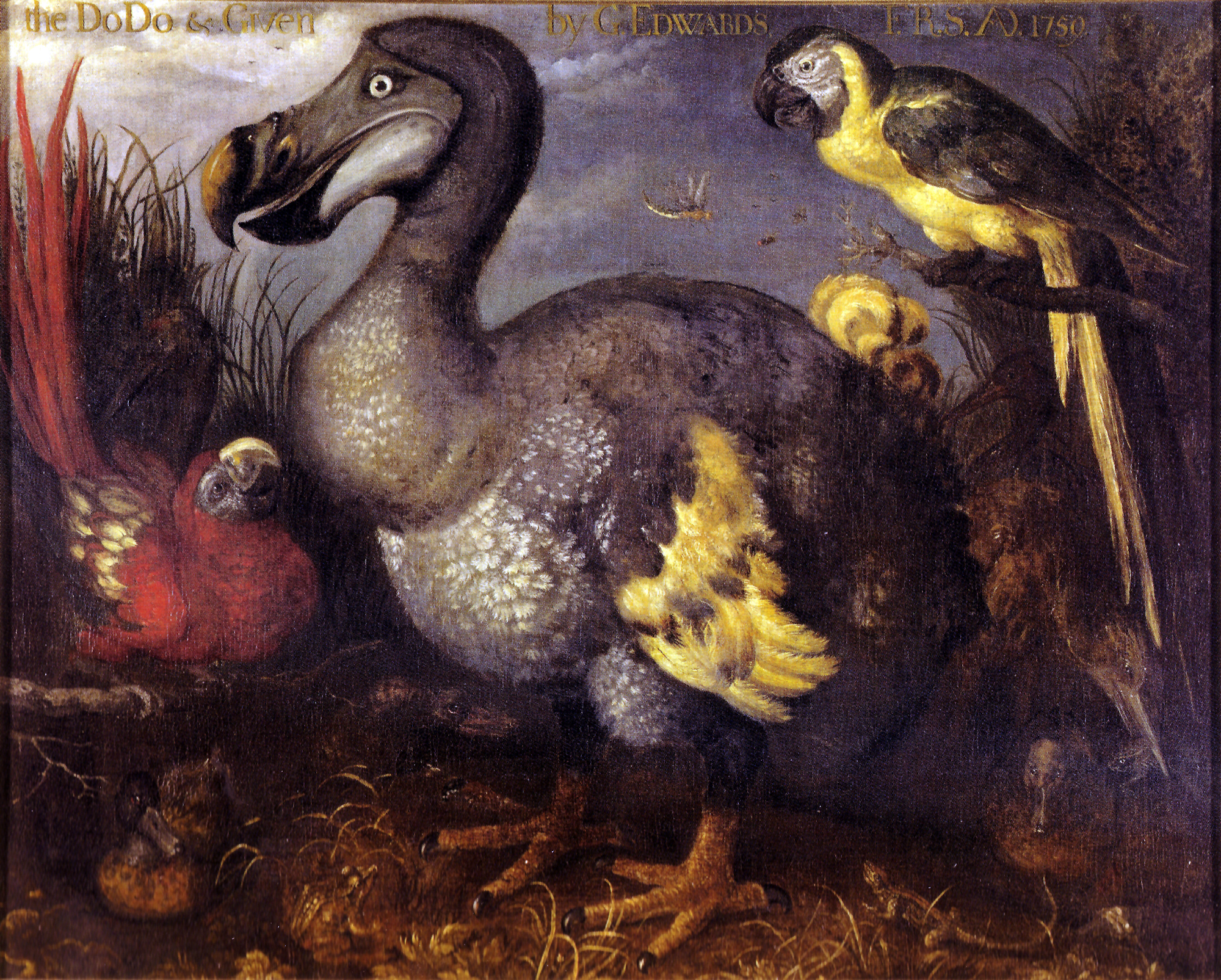
It vanished so completely, and so quickly, that within a century people doubted it had ever existed at all, a creature known only from a few oil paintings and travellers’ tales, dismissed as a sailor’s invention until subfossil bones proved it real. No animal is more famous for being extinct; none has a better claim to be the emblem of this museum.
No complete dodo was ever preserved. The last stuffed specimen on earth, mouldering in Oxford, was thrown out in 1755; a curator saved only the head and one foot from the fire. They remain the sole soft tissue of a dodo in existence.