The Statue of Zeus at Olympia
The god before whom even his sculptor is said to have trembled.
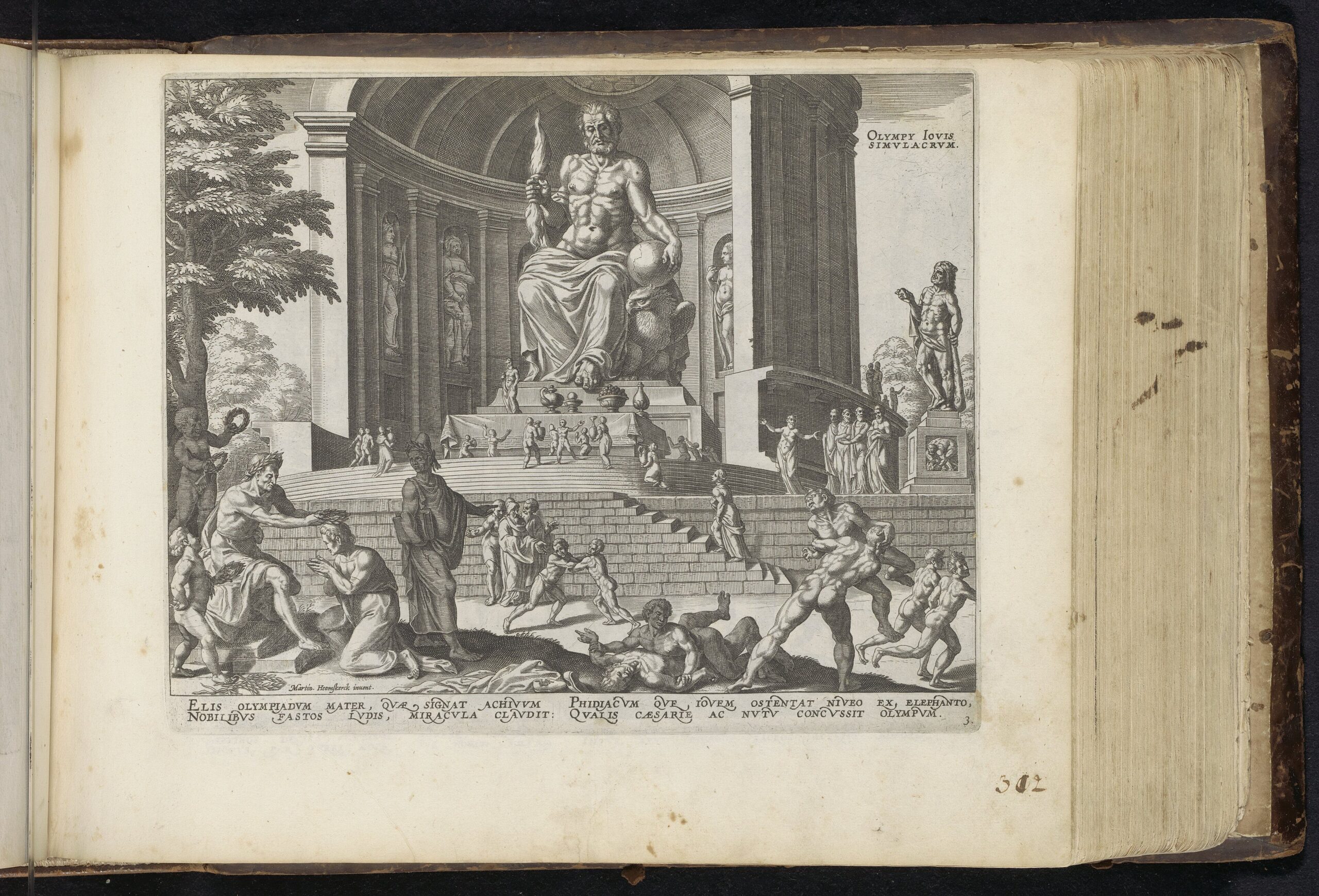
- EXISTED
- c. 435 BC, lost in the 5th century AD
- WHERE
- Olympia, Greece; later Constantinople
- LOST
- c. AD 475
- CAUSE OF LOSS
- Removed from its temple, then consumed by fire
Some twelve metres high, seated upon a cedar throne inlaid with ebony, ivory and gold, the Zeus of Olympia was the masterpiece of Phidias, the greatest sculptor of antiquity. Its flesh was carved ivory and its robes were beaten gold; pilgrims came from across the Greek world simply to stand in its presence, and it was said that to see it was to feel the god looking back at you.
When the ancient games were suppressed and the temples closed, the statue was stripped of its setting and carried away to Constantinople as a trophy. There, around AD 475, it is thought to have burned in the fire that destroyed the Palace of Lausus, along with a whole gathered hoard of pagan masterpieces. The supreme image of the king of the gods left behind not one splinter of ivory.
Carried off to a palace in Constantinople, the statue is believed to have perished in the great fire of the Palace of Lausus around AD 475. Not a fragment of it survives; we know it only from coins and descriptions.