The Mausoleum at Halicarnassus
It named every great tomb that came after, then became a quarry.
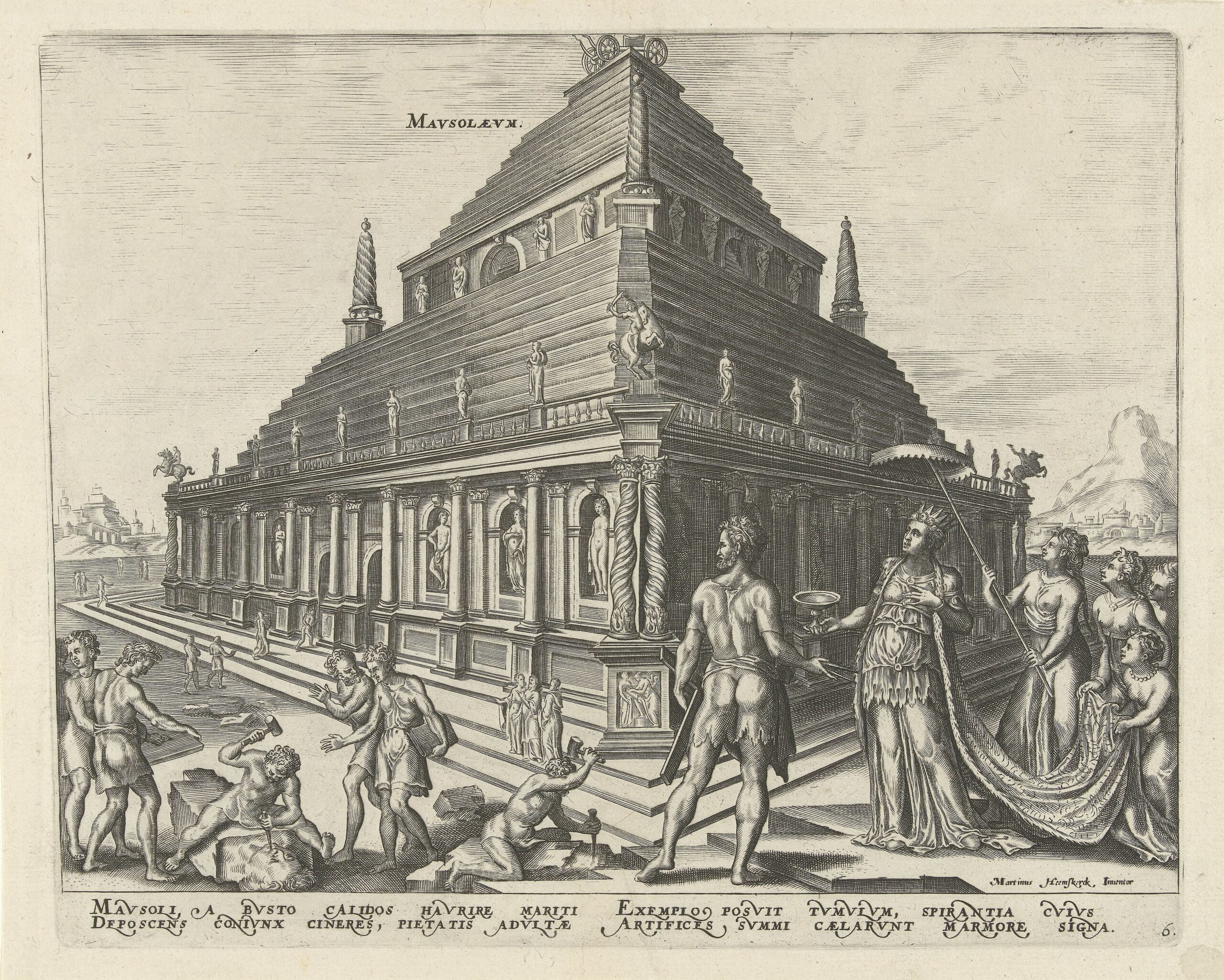
- EXISTED
- c. 350 BC, destroyed by the 15th century
- WHERE
- Halicarnassus (modern Bodrum, Turkey)
- LOST
- c. AD 1494
- CAUSE OF LOSS
- Earthquakes, then deliberate dismantling for building stone
When the Persian satrap Mausolus died in 353 BC, his widow Artemisia built him a tomb so magnificent, a marble podium crowned with columns, a stepped pyramid and a chariot of stone, adorned by the finest sculptors of Greece, that it was counted among the Seven Wonders, and his name became the word for every grand tomb since: every mausoleum on earth is named for this one man.
It survived very nearly intact for some sixteen centuries before earthquakes finally brought it down. The true end came at human hands: the crusading Knights of St John, needing stone to fortify their castle at Bodrum, pulled the ruins apart and fed the exquisite marble reliefs into their lime kilns. The Wonder that gave its name to monuments of memory was itself ground up and forgotten.
Knights of St John, fortifying Bodrum Castle in 1494, broke up what the earthquakes had left and burned its marble sculptures into lime for mortar. A few battered slabs, carried to the British Museum, are nearly all that remains.