The Burning of the Books
An empire that tried to make history begin with itself.
- EXISTED
- 213 BC
- WHERE
- Qin dynasty China
- LOST
- 213 BC
- CAUSE OF LOSS
- Imperial decree, to erase rival schools of thought
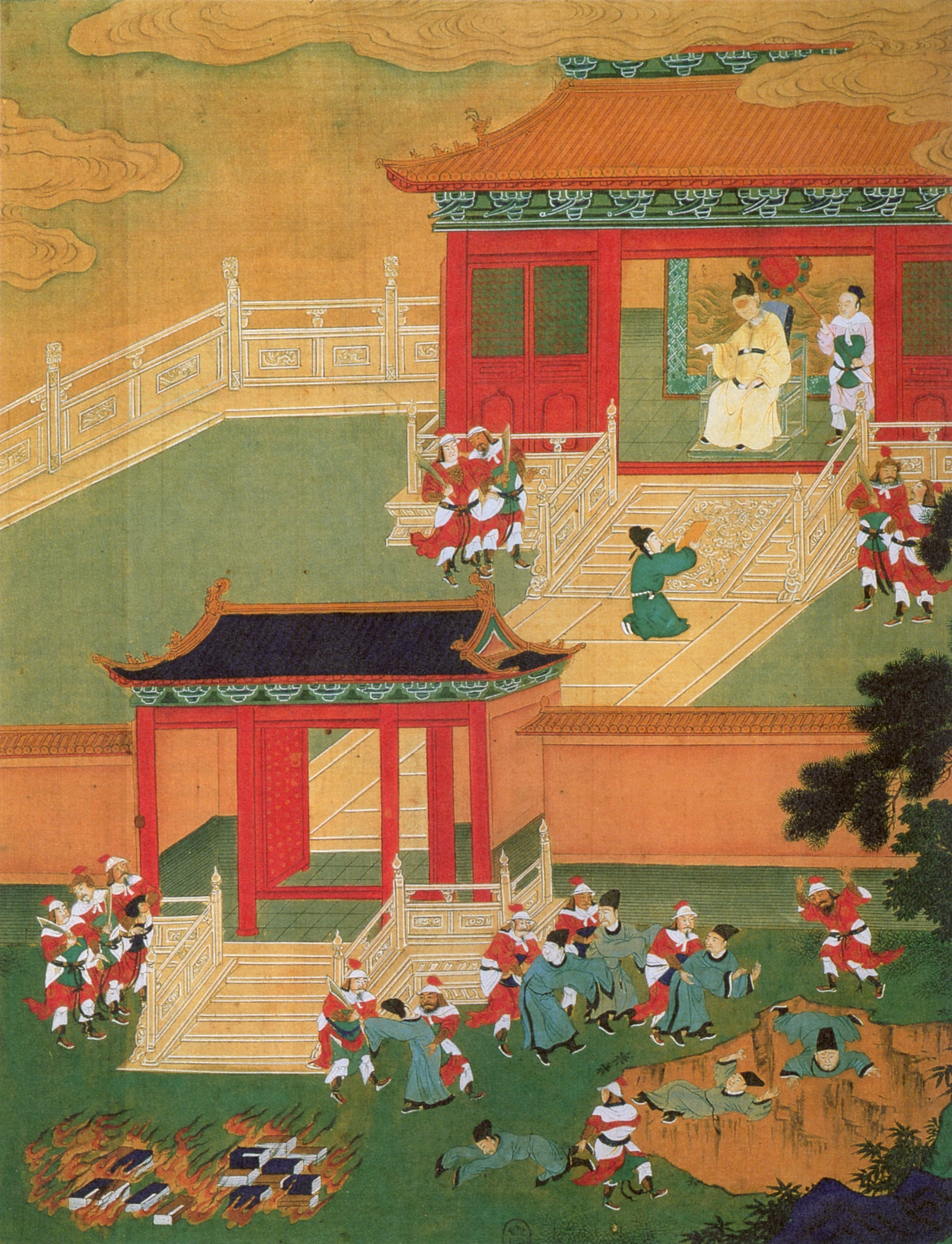
In 213 BC, on the counsel of his chancellor, Qin Shi Huang, the first emperor to unify China, ordered the burning of books. Histories, poetry and the writings of the philosophical schools were to be surrendered and burned, so that learned men could no longer “use the past to criticise the present.” Practical works on medicine, agriculture and divination were spared; the memory of the rival states he had conquered was not.
Tradition holds that the suppression went further still, to the burying alive of hundreds of scholars. How much was truly lost is itself uncertain, which is its own kind of loss, but the destruction of the old chronicles left vast stretches of early Chinese history forever dark. It stands as the first great deliberate erasure of knowledge in the historical record, and far from the last.
The chronicles of the conquered states were singled out for total destruction. Whole kingdoms lost their recorded memory in a single season; of much pre-Qin thought, only what scholars hid in walls or carried in memory survived.